

Why You Need Outdoor Skills
Sometimes, bad things happen to good people. So when you find yourself in a dangerous situation, it’s imperative to know what to do and how to do it. Here, our experts cover the common mistakes and what you can do to lessen the severity.
Wilderness survival can be perhaps the most challenging undertakings that should not be taken lightly.


What to do before your trip?
To become familiar with the natural wilderness survival situations, one ought to take a crack at a survival school’s survival training programs. Different schools and foundations may have different types of programs and philosophies. Choose the curriculums offered to provide you with the fundamental skills needed. These schools may give you the skills and abilities to increase your chances of survival in the wild. Initially, it would help if you looked at schools or programs in your local areas or regions. It is possible to become familiar with the skills needed by reading books or articles on water sources, different scenarios, tools, edible plants, food sources, and gear. Then, you can practice these skills at specific sites in your area or some neighborhood wilderness territories.
One should know the how-to, where to, and what to regarding wilderness survival abilities. While remaining in the wild, it is about staying alive. Your safety is the very pinnacle of concern. Protection must be learned as the risks in the wild will probably be various and unforeseen. Confidence is the best mindset that can be used along with boldness, belief, and expectation. It would be best to think of these  different things while having a hike or remaining in the wild. The significance of outdoor training is that people will have a better opportunity to stay alive in brutal conditions because of their essential skills and knowledge training. By taking part in a wilderness survival course, people may understand the significance of life in a more customary manner while being taught by a survival specialist. You probably will better know what you must do when the worst-case scenario rears its ugly head at the most inopportune time.
Acquiring the vital skills and abilities that can be applied in the wild is maybe one of the fantastic accomplishments throughout everyday life. Most people will, in general, dodge risks as much as possible by living in a climate where they think they are protected. However, these individuals ought to realize that things throughout everyday life, especially those incredibly difficult, require physical and mental capability. Including yourself in wilderness survival training can help you with your self-confidence when tackling obstacles in everyday life.
How to stay alive in the wild
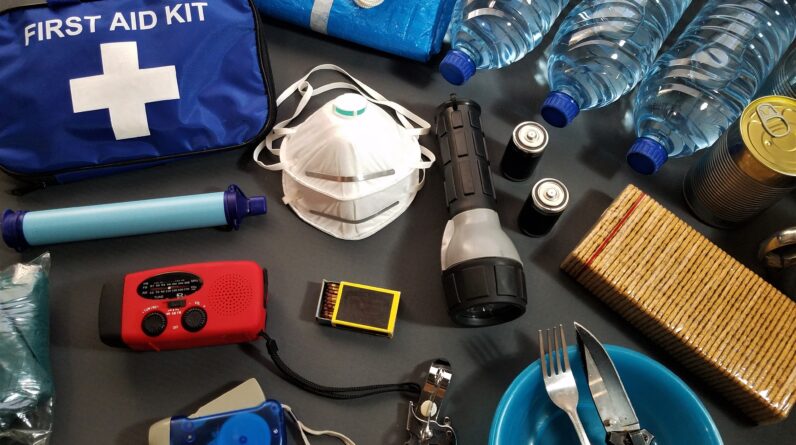
To survive in the wild, one should never forget that one needs shelter, fire, and water. It would be best if you always carried some knife or a hatchet and lighter or matches.
Getting Water to Drink
Remaining hydrated is likewise a significant need. An individual can bite the dust from thirst in only three days. Do you know that if you are less than 10% dehydrated that you could lose consciousness? Think about that for a moment.
First things first. You will have to find a source of water. Water flows down a river or stream. It will collect in pools, ponds, lakes, or depressions. Remember this; most water is not clean enough to drink.  Now that you found it, you need to purify the water for drinking.
As this is a basic overview of wilderness survival situations, we will only be covering fundamental ways to purify your water. Here are the methods:
- Unless your source is extremely clean, you might want to filter out particles. You need to have a container or make one to filter out the
 particles. After you complete this step now, you can continue to purify the water.
 - You now have a somewhat clean source of liquid. If you have a filtration straw with you, enjoy the drink. If not, you can boil the water to reduce the bacteria and microorganisms. These substances will usually not survive in boiling water, and they will likely die off during the heating process. Make sure it is on a rolling boil for 5 minutes and let it stand for 5 minutes.
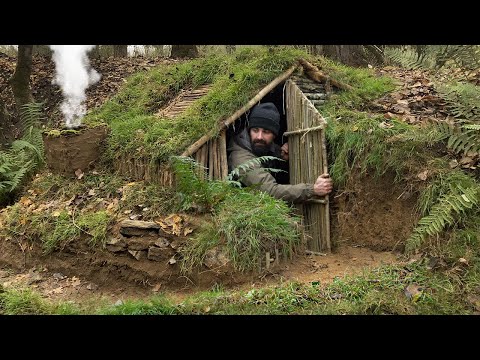
What Do I Do to Create A Shelter?
The ideal situation is to never venture from home without something to make a shelter and a way to stay warm. Things like space blankets, emergency sleeping bags, tarps, or even large garbage bags can be used to keep warm and dry.
Make sure you understand all the potential problems in your area before looking for shelter. For example, check for where rain runoff flows down a hillside, do not set up near dead-looking trees or branches. Make sure to stay out of depressions, dry riverbeds, or anything you deem unsafe.
What do you do if you don’t have any of the item s from above? First, you can create a lean-to to provide shelter. Next, find a rock outcropping that can also be used as shelter. Fallen trees are another source to use. Caves would be my last resort, not even sure I would use them, but make sure they are not currently or have not been occupied for some time.
Now, where to sleep. Please don’t do it on the ground. It would help if you put something between yourself and the ground, or you will wake up in the middle of the night chilled to the bone. Find some dry leaves, dry grass, small sticks, or pine boughs. Layer these to provide an area between you and the ground.
Fire for Warmth and Cooking
Fire is the key to survival. If you don’t have a way to make a fire, you can’t cook or stay warm. And if you don’t have a fire, you don’t have a way to be safe from your surroundings as well as dangerous animals. That’s why it’s essential to know how to make a fire.
You need three types of firewood:
- Needles, dry leaves, small twigs, or dried-out grass. These items are known as tinder.
- Next, gather your kindling or small sticks. A good rule of thumb is something smaller around than your thumb.
- Finally, is your logs or larger pieces of wood.
We won’t get into the various ways to produce a fire, but let me say, it never hurts to have 2 or 3 Bic lighters around. You can get them for about a buck apiece.
Make sure you have plenty of the above material before you light your fire. Next, build a fire ring to contain the fire. The last thing you want is the fire to start surrounding areas on fire. Build the ring with large rocks or other non-flammable material. This ring also serves as material that will get heated during the fire and radiate heat for some time, and it will stop the wind from putting out your fire.
Place your tinder in the middle of the fire ring and loosely place your twigs or kindling on top of the tinder. Light up the tinder, and as your fire grows, add the logs or larger wood to keep it going.
Final Thoughts
We have just covered the basics of what to do if you find yourself in an unpleasant experience. The first  thing you need to do is THINK. No matter what outdoor situation you find yourself in, it is always good to slow down and think. What supplies and gear do you have that you can use? What type of animal is in the area, and what has nature supplied to you? What navigation skills can I use to figure out where I am? These are all the actions you should ask yourself and many more to formulate your plan for surviving. Hopefully, the things we have discussed in this wilderness survival training piece will increase your chances of survival.